Music Policy Resilience Network Scale-Up Story: 10 lessons from 29 cities
Four years ago, the Music Policy Resilience Network started with a simple idea: that the tools used to study music ecosystems in major cultural capitals could be just as useful, if not more so, in places policy conversations usually overlook. Not London, but Galva, Illinois. And not Reykjavík, but Tórshavn.
Twenty-nine cities later, this has become a body of evidence. MPRN's members stretch from Nuuk to Cuenca, and from Shetland to Alaska's Kenai Peninsula. Along the way, the network has become less a single research project than a rolling education whereby each city has played its own unique role in refining and deepening the understanding of what 'resilience' looks like in small, remote, rural, or simply generally under-resourced places.
What follows are the ten clearest lessons four years and 29 cities have taught us.
1. Connection is resilience itself
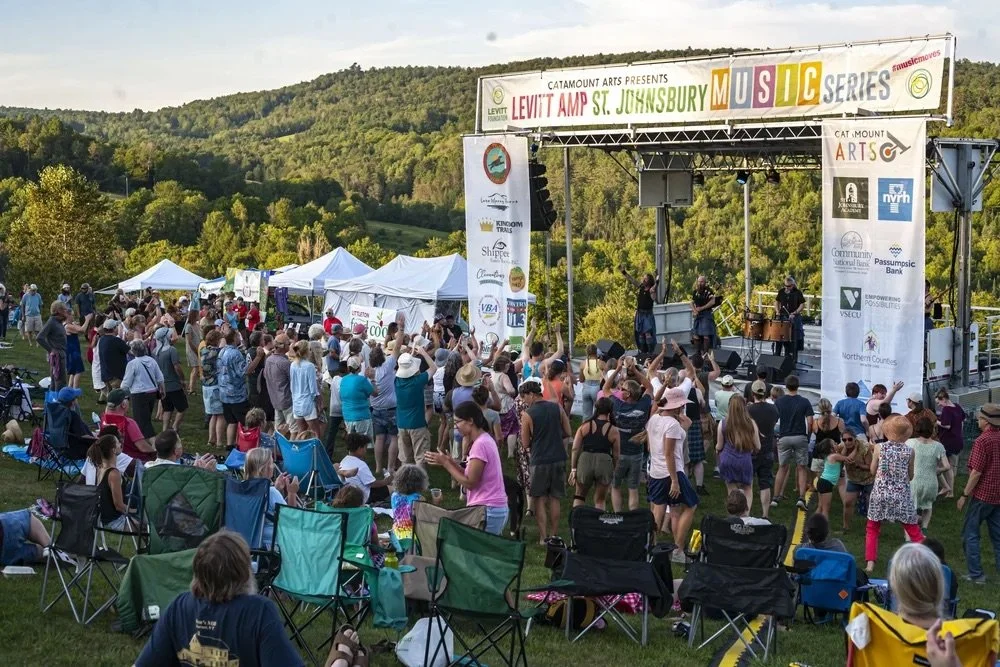
The single most consistent finding across the network: places become resilient not through one brilliant venue, funder or idea, but because stakeholders are actually talking to one another. Folkestone's venue-promoter alliances, Galva's community music coalitions and St. Johnsbury's work embedding resilience language into town planning weren't designed as strategies; they became one because collaboration turned individual effort into shared infrastructure. Funders aren't adding red tape, but rather, rewarding collaboration.
2. Music funding grows fastest not in a silo
Every city we've worked with names funding as a key challenge. The ones that break through rarely find more arts money, instead, they stop looking at (exclusively) arts budgets. Bishkek's ties between music and destination tourism, Folkestone's sponsorship facilitation, and Whitehorse's alternative venue-financing models all pull revenue from outside usual arts channels. Cross-sector fluency (making the case to a health board as convincingly as to an arts council) is now a core resilience skill, not a nice-to-have.
3. Audiences are built patiently, or not at all
None of our most resilient case studies got there through a single high-profile launch. Homer's social festival model, Princeton's genre inclusivity and Gallup's audience-development work all grew slowly, through pre-show talks, local radio curation and programming that reflected the community's own identity. Audiences that feel ownership of a scene stay engaged through shocks; audiences marketed to once, tend to pass on to the next exciting event.
4. Venues are the most fragile pressure point - and it is universal
Whatever differs between Whitesburg, Kentucky and Cuenca, Ecuador, this doesn't: venue affordability, accessibility and infrastructure fragility show up in every research project we’ve undertaken. Folkestone's promoters struggle to access larger venues; Cuenca's venues face energy shortages; Galva, Nuuk, Mariehamn and Umeå all lack multifunctional space. The recurring fixes like reopening underused heritage buildings, piloting pop-ups, or shared venue networks show clear patterns emerging.
5. Supporting artists means more than writing grants
Financial support matters, but alone it doesn't hold artists in place. Every city pointed to the same missing pieces alongside funding: rehearsal space, mentorship, mental health support, skills development and career guidance. All of these priorities were made explicit, for instance, in Gander's artist-mapping work. This shows up hardest in isolated places: Homer and Cuenca both flagged upskilling and wellbeing as the difference between an artist staying and leaving for good.
6. Isolation can become identity, not a deficit
This was the most counterintuitive lesson of the network. These places didn't “overcome” their remoteness but rather they built on it, turning geographic and cultural distinctiveness into a sense of place. At April's Greenland Music Policy & Artist Development Conference in Nuuk, that idea took on national stakes: Greenlandic artists, municipal leaders and international partners spent two days discussing a music export identity authentically Greenland's own. The lesson generalises beyond the Arctic: remoteness is not, and nor should it be considered, automatically a disadvantage.
7. Digital tools are a complement to live music, never a substitute
Hybrid and digital models, accelerated by the pandemic, have extended reach for isolated ecosystems. Cuenca's hybrid performance formats are a good example. But nowhere in the network has digital investment replaced the need for physical venues, in-person connection or digital literacy support. At the time of writing, there is no substitute.
8. Shifting what audiences will accept takes deliberate, sustained work
In Cuenca and Princeton alike, conservative audience taste has quietly limited programming ambition, not through hostility but simply through habit. The cities making progress treat audience education as active, ongoing work: pre-show framing, diverse lineups, local media partnerships and weaving experimentation into programming.
9. Bureaucracy is an underestimated killer of grassroots activity
Complex permitting and restrictive licensing came up as urgently in Cuenca and Folkestone as any funding gap. A one-stop cultural permit process and flexible approvals for pop-ups sound like small fixes; in practice they're among the highest-leverage interventions we've identified. This has gained urgency in 2026: the UK's grassroots venue crisis (Music Venue Trust counts 175 towns with no regular touring shows) shows how fast systemic friction compounds into closures.
10. Inclusion is still incomplete, even where everyone agrees it matters
This is the lesson we're least satisfied with, and most committed to closing. Almost every city recognises, in principle, the importance of representing marginalised, BIPOC, disabled and rural communities in programming and governance, but recognition doesn't reliably translate into representation. Darwin's work with Larrakia culture and Cuenca's multilingual, Indigenous-informed programming point toward genuine inclusion; the gap between stated values and lived practice remains real, and closing it is unfinished business.
Four years in, the pattern across all ten lessons is really one: there's no universal template for a resilient music ecosystem, only a shared discipline of listening hard to local stakeholders and applying what works elsewhere with real adaptability and humility. That discipline took MPRN from six founding cities to 29, from the Arctic to the equator, and will carry it into its next phase.
We look forward to what the next twenty-nine cities teach us.
The Center for Music Ecosystems is the charitable partner of Sound Diplomacy, and a 501(c)(3) not for profit organization. Their mission is to incorporate music into addressing and solving the biggest challenges of our time. Their work consists of research, policy, and global thought leadership on how music can advance economic, social, and human development.
To express interest in your town, city or district joining Music Policies Resilience Network, see here.