A Blueprint for the Music City: Lessons in Building Music Economies from Hull, Newcastle, Sheffield and London
A city's music ecosystem rarely appears in strategic planning documents, and it hardly ever features in zoning frameworks or infrastructure budgets. And yet London generates nearly a third of the UK's total live music revenue, anchors a £21 billion annual nighttime economy, and powers a national industry worth £8 billion in Gross Value Added. The economic case for music-led city development has been around for a long time, but activating and maintaining it is much harder.
Think of a city's music ecosystem as an operating system: hardware (venues, studios, rehearsal rooms, night transport), software (the tools and technology enabling creation and distribution: AI, streaming, community platforms), and networks (the intermediaries, collectives, and civic relationships connecting artists to opportunity). For a system to function, all three layers must be healthy. When one degrades, the others follow. The cities getting music right have worked that out.
London is the richest case study available. What it's getting right and what hasn’t been working is the most useful and portable lesson.
Hardware Has to Hold
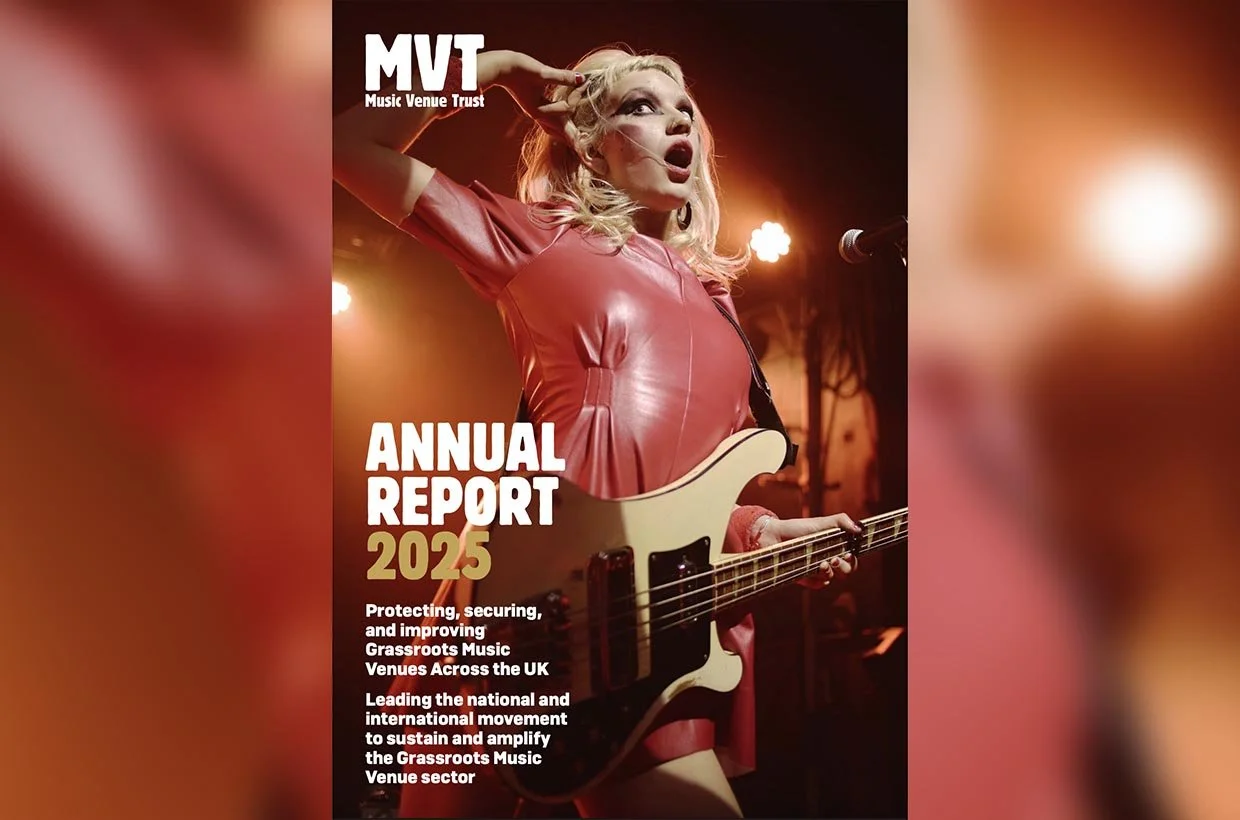
Physical infrastructure is most visibly under pressure, and the numbers from the Music Venue Trust's 2025 Annual Report are hard to ignore. It records 801 grassroots music venues currently active across the UK, down from 960 just two years earlier. Even though the pace of closures has slowed, 53.8% of these active venues reported no profit last year. Total employment across the sector also fell from 30,865 to 24,742 in a single year, accounting for a 20% contraction. One in three venue operators does not pay themselves a salary.
The development pipeline is at risk due to these venue closures and fractured touring circuits. 59% of UK grassroots venues now operate with no major promoter activity. More than 175 towns and cities that have a combined population of 35 million people no longer have reliable access to national touring artists. The city-makers must pay attention to this compromised talent pipeline. Research into the artist economy found that 76% of electronic music artists consider their careers financially unsustainable, with 56% working full-time outside of music entirely. The supply of good talent is not the problem. The rooms, routes, and opportunities that turn talent into careers are disappearing.
Peckham Levels
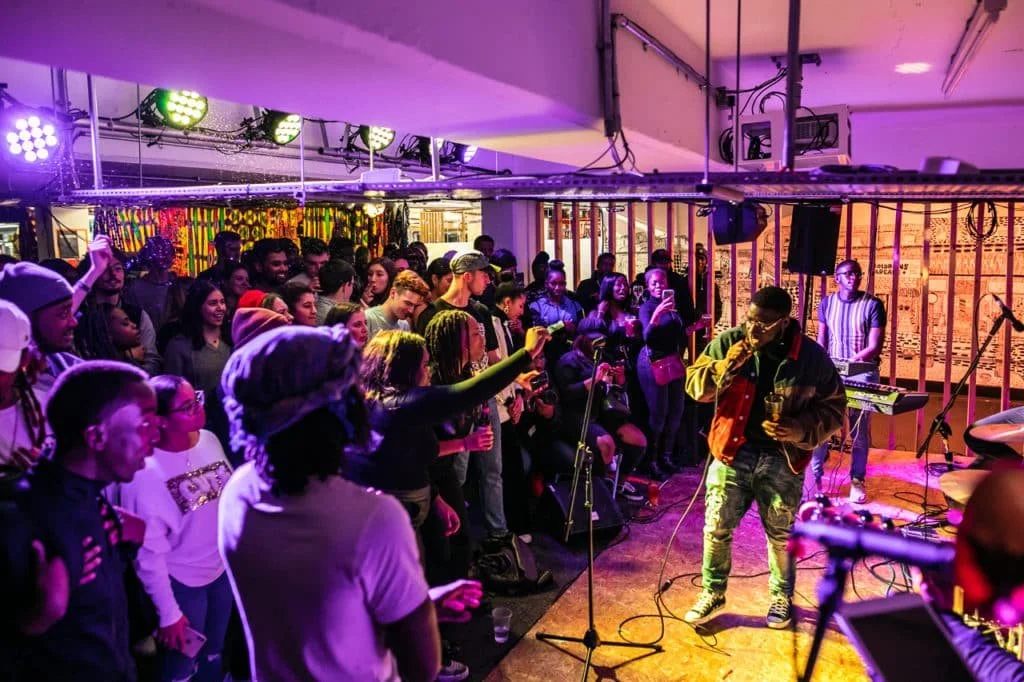
South London's Peckham points toward something better. Peckham Levels, a converted multi-storey car park on Rye Lane, holds artists, food traders, makers, and a live music programme under the same roof. Steam Down's weekly jazz session there has become one of London's most enduring live rituals, free and open to all. It endures precisely because the space was never built around it. A dedicated music venue needs every event to cover its costs. Peckham Levels is structured differently: when traders, makers, and workspace tenants share the building, cultural programming is free to take risks because it isn't carrying the building's costs alone. Listed as an Asset of Community Value by Southwark Council, its operating agreement mandates community benefits as a condition of running the site. The model was designed that way from the outset.
The Bussey Building operates on the same logic, mixed-use, civic, and harder to displace. City planners looking to strengthen their music hardware don't need to build more dedicated venues. They need spaces where culture happens as a matter of course: mixed-use civic rooms embedded in the daily life of communities, designed to absorb the economic pressures. When food traders, workspace, and community hire cover the fixed costs, music programming is free to take risks. The Mayor of London's Nightlife Taskforce took a step in this direction in January 2026, proposing a centralised register of vacant and underutilised properties that could be activated as new cultural spaces.
Software Unlocks Access if Governed Well
The tools for making music have never been more widely available. UK Music's 2025 music creators' survey found that 18% of creators now use AI tools in their work, rising to 39% among producers. For a self-releasing artist anywhere in the UK, tools that once required expensive studio time can now run on a laptop. That democratisation matters especially in cities where studio access has historically been limited by cost and geography.
Despite democratisation, the governance gap beneath the opportunity is far from being resolved. 66% of creators believe AI poses a threat to their career. 92% say AI-generated music should be clearly labelled. 93% say AI companies should pay if they use musical compositions to train their models. The APPG on Music's 2024 inquiry concluded that AI's creative potential will only be realised fairly with strong legislation built into how music is created, distributed and consumed. Cities building music technology clusters have a direct stake in getting that framework right. According to Sound Investments, MTUK's 2025 state-of-the-nation report on the UK music tech sector, London captures 94% of all music tech investment despite being home to only half of UK music tech companies. That concentration brings responsibility. The governance decisions made here will shape how these tools reach artists and creators everywhere else, and the software layer can democratise access or entrench extraction, depending on who controls the rules.
Networks Are Where Cities Win or Lose
The third layer is the one cities most consistently fail to fund. Development organisations, community programmers, civic connectors: the intermediaries linking artists to opportunity are what separates a scene that generates talent from one that retains it.
UK Music's Black Music Means Business report found that Black music genres have driven 80% of the UK's recorded music market value over 30 years, £24.5 billion out of a £30 billion total. Yet only 22% of senior leadership roles across the music industry are held by people from Black, Asian, or minority ethnic backgrounds, against 46% of London's overall population. When investment decisions and network connections don't reflect the communities generating the culture, the ecosystem is structurally misaligned. This misalignment carries a direct economic cost as commercially and culturally valuable scenes get underfunded at the point where they need support most.
The Mercury Prize had never been held outside London until Newcastle hosted it in 2025. The city is a prime example of what strong investment looks like in practice. In October 2024, Generator and The Glasshouse International Centre for Music launched Newcastle Gateshead Music City: an initiative to map the region's ecosystem, establish a Music Board connecting grassroots venues to major labels, and build a strategy backed by the North East Combined Authority. Music tourism to the region grew 29% in 2023. By 2024, the North East was generating £364 million from music activity, up £180 million year-on-year, and had created 1,300 new jobs. Generator functions as the connector: a single organisation simultaneously developing emerging talent, forging partnerships with major labels, holding civic relationships, and keeping artists rooted locally rather than watching them leave for the capital.
Hull and Sheffield: A Blueprint in Motion
Hull has been making the same argument for a decade. From its year as UK City of Culture in 2017 to its current five-year plan to achieve UNESCO City of Music status by 2030, Hull has systematically placed music at the centre of civic identity. The Hull Music Plan 2025–2030, launched alongside a newly formed Music Board in July 2025, sets out four strategic priorities: inclusion, storytelling, music infrastructure, and raising Hull's profile internationally. The city has also signed the UK Music Local Music Action Charter, embedding music formally into planning and economic policy. Its musical heritage is strong and deep with renowned artists like The Housemartins, Throbbing Gristle, Everything but the Girl, and contemporary artists like Chiedu Oraka. It has deliberately chosen to build its economic and tourism strategy around that legacy rather than simply honour it.
In June 2026, Hull hosts the Music Cities Convention, drawing over 250 delegates from more than 25 countries to discuss how music drives urban transformation. The fact that Hull hosts this conversation, rather than simply being studied by it, is itself a statement of strategic intent. The city has moved from having a music scene to using music as a planning instrument.
Sheffield is on the same trajectory. Its first Culture Strategy, launched in December 2024, builds from a creative sector already contributing nearly £1 billion to the local economy. Sheffield's Growth Plan 2025–2035 names culture as a core economic mission. Both cities share the same structural insight: music can actively shape a city's identity when the ecosystem is treated as infrastructure and investment is sustained.
What the Blueprint Requires
Cities have historically funded buildings. The harder, more important investment is in the organisations that make buildings matter. Generator in Newcastle, Culture Sheffield, Hull's civic music infrastructure: these are all mechanisms that make those buildings relevant and alive. Investing in them over the years is what turns a music scene into a music economy. The LIVE Trust established in 2025 to distribute revenue from arena and stadium tickets to the grassroot is one powerful initiative that has created a mechanism for reinvesting commercial success in the foundations it depends on.
Hull's UNESCO journey, Newcastle's intermediary model, Sheffield's decade-long strategy, London's mixed-use civic spaces: these are the hardware, software, and networks of a working blueprint. The cities that study them and act will still be generating music and the economic and social value that flows from it, in thirty years. Ultimately, the question is which cities chose to build using this existing blueprint.