Designing the Soul of the City: A Pre-Sound Development LA Conversation with RIOS
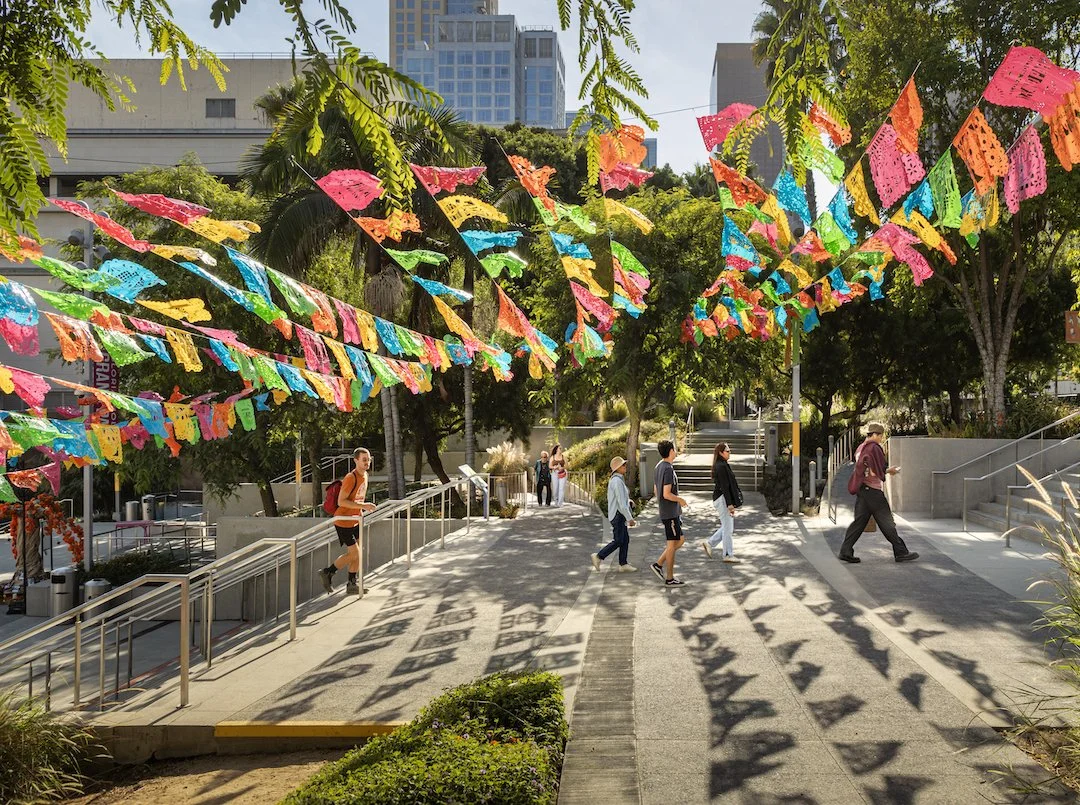
The Music Center Grand Park
How do you create a landmark that feels like it has always belonged? For the international multidisciplinary design firm RIOS, the answer lies in hyperlocal authenticity and a commitment to relevant experiences.
RIOS' combination of architecture, landscape architecture, urban planning, interior design, and experience design is set out to intensify the impact of their projects and take them one step further. They design cultural spaces that connect people, amplify experiences, and tell the story of a place and its identity.
In anticipation of our upcoming conference in Los Angeles, our Chief Strategy Officer Azucena Micó sat down with Melanie Freeland, Creative Director and Partner at RIOS, to discuss how the firm balances historical iconography with modern programming, the future of sustainable cultural districts, and why sometimes "less is more" when it comes to community design.
Crafting an Irreplaceable Identity
Azucena Micó: RIOS creates cultural spaces with "real soul" that become cultural landmarks, focusing on hyperlocal design. How do you define that authenticity and identity from the planning stage? And how do you ensure that this initial vision translates through the entire design process?
Melanie Freeland: At RIOS, authenticity and a sense of wonder are at the forefront of everything we do. Every project begins with immersive research, understanding the history and context of a place, as well as understanding how people are using it from day to night. We’re on the ground engaging in discussions with the community to uncover how spaces are used.
From those exercises, we craft a narrative with the research we’ve collected that forms a point of view inherent to its location and the people who shape it. The design story then becomes our guiding force and is referenced throughout the design process. Even in the most technical moments of construction, when we’re refining a detail or making a tough decision, we return to that narrative touchstone. It ensures that the design’s integrity isn’t compromised, no matter the challenges of value engineering.
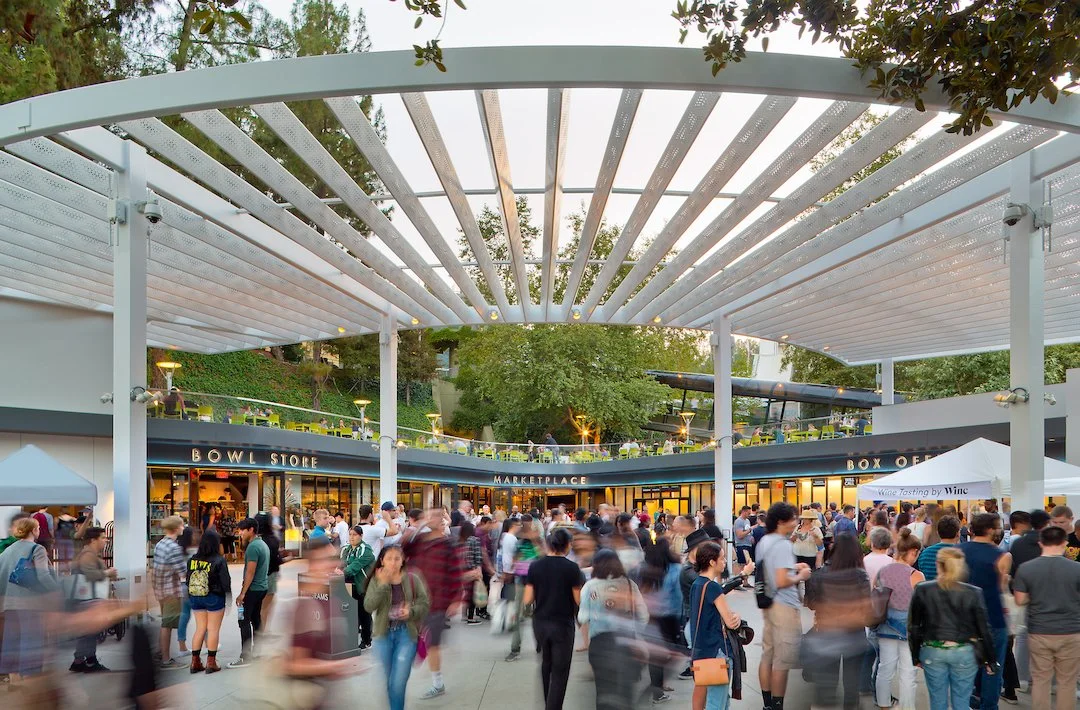
Hollywood Bowl Box Office Plaza
Revitalization and Adaptive Reuse
AM: Your work covers strategies like adaptive reuse, and revitalization, like The Hollywood Bowl, The Jerry Moss Plaza at The Music Center and The 1901 Project. When approaching a master plan, how do you balance the need to meet cutting-edge technology, modern programming and operational demands, with maintaining the historical essence and existing iconography that makes a place irreplaceable?
MF: We approach every project with openness and a spirit of shared curiosity, never with a rigid agenda. As designers and collaborators, we engage with stakeholders to understand what makes a place leave a lasting impression. A successful project for RIOS is an environment that is living and breathing from day one, and ready to evolve alongside the communities they serve. These spaces are never static, they invite new experiences and interpretation each visit.
We are committed to making sure our work remains relevant rather than just "trendy." To do that, we have to be able to take in new ideas throughout the life of the project while maintaining that core belief of what we’re bringing to the site is an authentic vision. That is how we honor the past while shaping the future.
AM: You’ve mentioned the concept of building versatility into venues that host everything from sports to culture. How do you ensure these sites remain relevant for generations?
MF: One of our core beliefs is creating "ticketless experiences". A project has it’s primary programming, but we always ask: how can we layer new narratives and uses that make these places real and accessible to a broader community?
Whether it’s for a picnic, a community meeting on a weekday morning, or a major sporting event, we design spaces to support the full spectrum of community life, not just for a single program. When projects are loved and used by a wider audience, their value and relevance grows over time.
"A successful project for RIOS is one that’s living and breathing from day one... It’s not a static experience."
Sustainable Design for the Entertainment Sector
AM: Sustainability is a massive focus for you. How do you balance the creative ambition with environmental and social responsibility when developing spaces for entertainment?
MF: For us, sustainability isn’t about checking a box. From the get-go, we prioritize passive strategies, for example thinking about massing, orientation, and shading early on so our client sees how every decision contributes to long-term goals.
We think hyperlocally about materials, spending carbon only when it’s necessary. Collaborating with local artisans, or sourcing regionally whenever possible not only shortens construction time, but it also deepens the projects connection to its place. It’s also about educating our clients. When we explain why we chose a certain material, perhaps a piece of salvaged wood that was repurposed into a planter or bench, it makes the project part of a larger environmental discussion.
AM: Do you have a specific group or team working on sustainability at RIOS?
MF: We do. Our sustainability group is led by Golnaz Ighany, in London, and we have a sustainability committee that champions these efforts throughout our practice.
The 1901 Project at United Centre
We have a research arm that has funded projects like the Campfire CLT Pavillion which was a striking installation made from salvaged wood repurposed as Cross-Laminated Timber (CLT) which debuted at the International Mass Timber Conference in Portland. We are committed to practicing what we preach, ensuring there are avenues for our teams to get involved and stay at the forefront of sustainable design.
AM: Do you perform any monitoring or evaluations of the sustainability of these venues after they are completed?
MF: Yes, we do. We try to understand obvious metrics, like system performance, but we also go back to user groups to ensure the project is performing as expected. We assess the level of engagement and material performance, especially if we’ve specified something on the "leading edge" that hasn't been tested for decades. That way, when we use a new system again, we know it’s reliable and trusted.
Cultural Destinations and Civic Partnership
AM: Cultural venues are powerful engines for urban development. From a placemaking and urban planning perspective, what is the most compelling argument your firm presents to municipal governments and creative sector stakeholders to demonstrate that investing in a cultural venue masterplan will yield a return in terms of sustainable economic growth and improved civic life?
MF: Economic growth is the obvious answer. The 1901 Project, for example, is projected to have an estimated $2.5 billion impact. But the benefits go far deeper, if you have a cultural venue in your community, you aren't driving long distances to find a park, places to eat or shop, and attend concerts.
We also show the value in turning unused spaces, like parking lots, into spaces that divert stormwater and break down the urban heat of the city. Sometimes it requires education, demonstrating that these types of improvements don’t just benefit the developer’s profit, but it makes the city a better place to live.
AM: How do you work alongside governments and the creative sector to ensure these spaces serve both commercial and civic goals?
The Music Center Plaza Renovation
MF: Gloria Molina Grand Park and Jerry Moss Plaza at The Music Center in Los Angeles are excellent examples. Grand Park in DTLA was an area of the city that was underutilized. By bringing together stakeholders and promoters, we defined a shared vision, and secured a long-term budget and management plan. For instance, the Music Center commitment includes operating a non-profit performing arts organization that programs year-round programming throughout the Music Center’s theatres and at Gloria Molina Grand Park. Known today as “The Park for Everyone,” Gloria Molina Grand Park was honored with a Fast Company Innovation by Design Award for Timeless Design and its success is reflected in the vibrancy and diversity of the communities that come together to enjoy the park.
In Houston, we had the opportunity to transform a former concrete plaza into a new cultural venue landmark that now connects Downtown Houston’s Theater District. Our partnership with stakeholders, including Houston First Corporation, Discovery Green, Buffalo Bayou Partnership, and Market Square, was grounded in a robust discovery process. We took the time to deeply understand the existing recreational and cultural landscap, listening to the needs and aspirations of Houstonians.
Prior to opening, the project secured funding to ensure meaningful public programming for the first two years of public programming. Today, Lynn Wyatt Square for the Performing Arts serves as the green heart of downtown, Houstonians and visitors gather to experience the arts year-round.
You have to dream big together with city officials, but ensure there is a sense of ownership and stewardship at each level. It’s important to understand how spaces are maintained and used long-term, that’s the key to lasting success.
AM: Have you ever had a moment where the community said "no" to a big idea, and it changed your perspective?
MF: Each project starts with big dreams, and sometimes the community reminds us by saying things like, "We love that you're pushing us, but what we really need is playground equipment or a large open field for soccer and church events". Those moments are valuable and teach us that sometimes less is more. Leaving room for flexibility and openness is essential so the community can shape the space in ways we may not have imagined.
Future of Cultural Districts and Integrated Design
AM: Your firm specializes in the full spectrum of design, from architecture to experience design. Looking ahead, what is the next frontier for creating successful cultural districts and entertainment destinations? How do you foresee and respond to future trends in programming, audience interaction, and the creative economy?
MF: There is tremendous opportunity in designing spaces that bring communities together. People are hungry for social spaces where they can gather and express their ideas. Creating safe, welcoming spaces for all ages, backgrounds, and identities is more important than ever.
The future is also about transformation. A space might host morning exercises for seniors, and transform into a vibrant sporting venue by the evening. , Whether it’s a community meeting or filming a TikTok video, we have to design with the flexibility to allow for uses we can’t yet imagine.
AM: Finally, what are you most looking forward to at our upcoming conference in LA?
MF: I’m excited about meeting other professionals who are passionate about building community and are dedicated to this work. When you're building large-scale venues with community needs in mind, it’s most exciting when it’s done collectively. Every city is nuanced – what works in Barcelona might inspire a project in London. Learning from each other, breaking down barriers and thinking creatively together is what RIOS is really excited about.
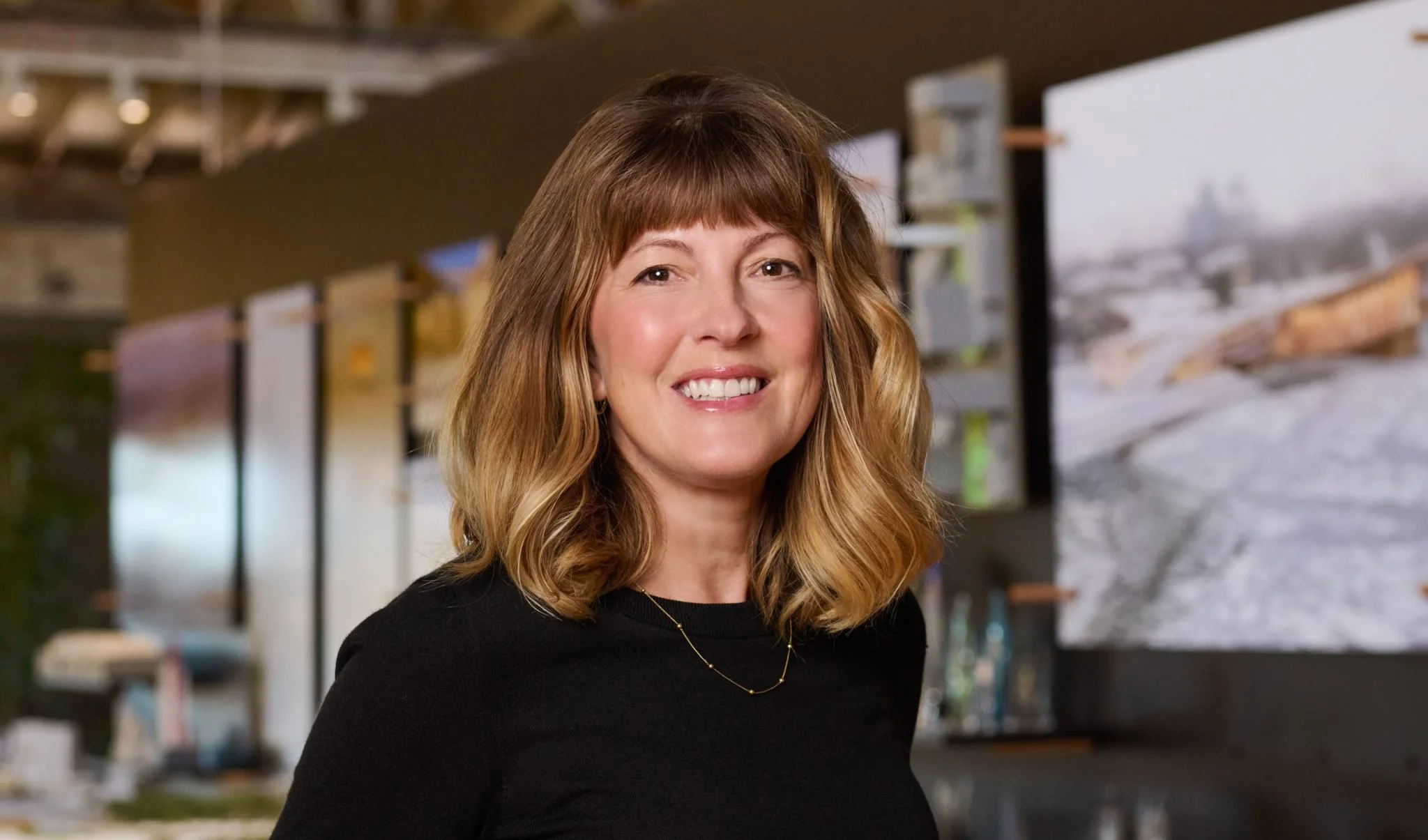
Melanie Freeland, Creative Director, RIOS
Melanie’s commitment to delivering innovative design in demanding settings is evident throughout her portfolio. As a Creative Director at RIOS, she is a valuable asset to a diverse set of projects from large-scale workplace projects like Sunset Las Palmas to wellness-driven oncology experiences like the University of Southern California Ellison Institute. She has over 20 years of Architecture and Interiors experience. Her background includes work on residential projects and works with prominent artists on site-specific installations, including the late Sol LeWitt, James Turrell, Jeff Koons, Robert Irwin, and Charles Ray.
images ℅ RIOS